Christmas Light Takedown and Storage in Asheville
With a full-service holiday lighting company in Asheville, takedown and storage are part of the job: the crew comes back after the holidays, removes everything, cleans it, labels it and stores it until next season. At Winter Star Lights, takedown runs between January 1 and February 15, and your lights are ready to go back up the following fall without you ever handling a box.
Takedown is the part of holiday lighting nobody thinks about in November and everybody dreads in January. Here is how it works when it is done properly, step by step, what is different about taking lights down on a mountain home, and what to watch for if you are comparing companies.

When are Christmas lights taken down in Asheville?
We schedule takedown between January 1 and February 15. Like installation, it is planned by neighborhood so the crew can move efficiently around Asheville and the surrounding towns. We let you know your date range by phone, text or email. You do not need to be home, as long as we have gate or door codes and any access notes, and pets that may react to strangers are secured.
The window runs into February for a practical reason. January in the mountains can bring ice, snow and hard freezes, and nobody should be on a slick roof just to get lights down a week sooner. A longer window lets us work on safe days.
It also means you do not have to plan around it. There is no call to make and no reminder to set. Takedown is already on the schedule from the day you book.
What do I need to do before takedown?
Very little, which is the point. A few small things help the day go smoothly:
- Keep access details current. If a gate or door code changed over the holidays, let us know before your date range.
- Secure reactive pets. Dogs that are fine with family can react to a crew and ladders in the yard.
- Clear the work areas. Cars parked right under the roofline, outdoor furniture against the house or a new project in a side yard can slow the crew down. A heads-up is enough.
- Tell us about anything new. A new fence, fresh landscaping or a contractor working on the house all change how the crew sets up.
- Mention any changes you are thinking about. If you already know you want something different next year, tell us. It helps us plan your design for the new season.
What happens during a professional takedown?
- Careful removal. Lights come off the roofline, gutters and trees the same way they went up: deliberately, without pulling on shingles, gutters or trim. Clips are released, not yanked, so nothing is bent or cracked on the way down.
- Trees and greenery. Wrapped trunks and limbs are unwound with care so bark and branches are not damaged. Rental wreaths, garland and mini lights come down with the rest of the display.
- Cleaning. Lights that spent two or three months outside collect grime, pollen and debris. They are cleaned before storage.
- Checking. Strands are checked so problems are found in winter, not on install day in October.
- Labeling. Because our perimeter lights are custom cut to your home’s exact dimensions, each run is labeled for where it goes. That is what makes next year’s install fast and accurate.
- Storage. Your lights are stored for you until next season. No tangled boxes in your garage, attic or crawlspace.
- Clean property. The crew leaves your property clean, the same standard we hold on install day.
What is different about takedown on a mountain home?
On a flat lot, taking lights down is mostly a matter of time. On many Asheville homes, it is a matter of conditions. A few things we plan around every winter:
- Tall downhill sides. A house that is one story at the driveway can be two or three stories on the downhill side. That roofline needs the same careful ladder setup coming down as it did going up.
- Shaded roofs. Roofs that face away from the sun or sit under big trees can hold frost and ice long after the rest of the property has dried out. We wait for those to clear.
- Frozen ground. A slope that held a ladder well in October can be icy or soft in January. Ground conditions are checked before anyone climbs.
- Wind. Ridge-top and exposed homes can get strong winter wind, which makes roofline work riskier. A long window means we do not have to work through it.
This is a big part of why takedown is often riskier than installation for homeowners doing it themselves. People rush it on the first mild weekend of January and pull strands off by hand. Our roofline safety guide explains what to watch for.
Why does storage matter so much?
Most of the problems people have with holiday lights start in storage. Strands get crushed in bins, wires kink, sockets get damp in a basement, and a mouse finds the box. Then in November half a run will not light and the whole weekend goes to troubleshooting.
Professional storage avoids that. The lights we cut for your home are commercial-grade LEDs, brighter, more energy efficient and longer lasting than retail lights, and they are handled and stored by people who do this every year. When we come back in October, your lights are organized by location and ready to go up.
Labeling is the quiet hero here. A run cut for the left side of the front gable goes back on the left side of the front gable. Nothing is measured twice, nothing is improvised, and the lines look as clean in year three as they did in year one.
Do I own the lights that are stored?
Yes. The custom perimeter lights cut for your roofline are yours. We store and reinstall them each season, which is why returning clients typically pay less than in their first year. Rental items, like wreaths, garland and mini lights, are priced separately and handled with the rest of your display.
How does takedown set up next season?
Takedown is not just the end of one season. It is the start of the next. Once the last homes are down, we begin planning the new season in February. Returning clients secure their place with a 25% deposit in February, with the balance due October 1.
Between February and September, you can talk with us about upgrades or changes, such as lighting another tree, adding wreaths or extending the roofline to another side of the house. Those are added to your final invoice, and because your existing lights are already labeled for their location, adding to the design is straightforward.
Then on October 1 the install season begins, and your lights go back up the way they came down. Our booking guide walks through the full calendar.
What if I want to take my own lights down?
Our service is built as a complete package: design, installation, in-season service, takedown and storage. Part of the value is that the same crew that installed your lights removes them carefully and stores them correctly. We also do not work with client-purchased or used lights, so we are not able to store or reinstall lights from another source.
If you hang your own lights and plan to take them down yourself, a few basics help: wait for a dry, above-freezing day, release clips instead of pulling on strands, coil each run loosely and label it, and store lights somewhere dry, away from crushing weight and rodents.
What about landscape and patio lighting after the holidays?
Holiday lights come down, but landscape and patio lighting stays up all year, and it benefits from a once-a-year check too. For landscape lighting, we recommend an annual maintenance visit to clean fixtures, adjust stake placement and fine-tune any beam angles that have shifted over the season. For patio lighting, a yearly visit to clean bulbs, check attachments and tighten turnbuckles keeps the system looking its best.
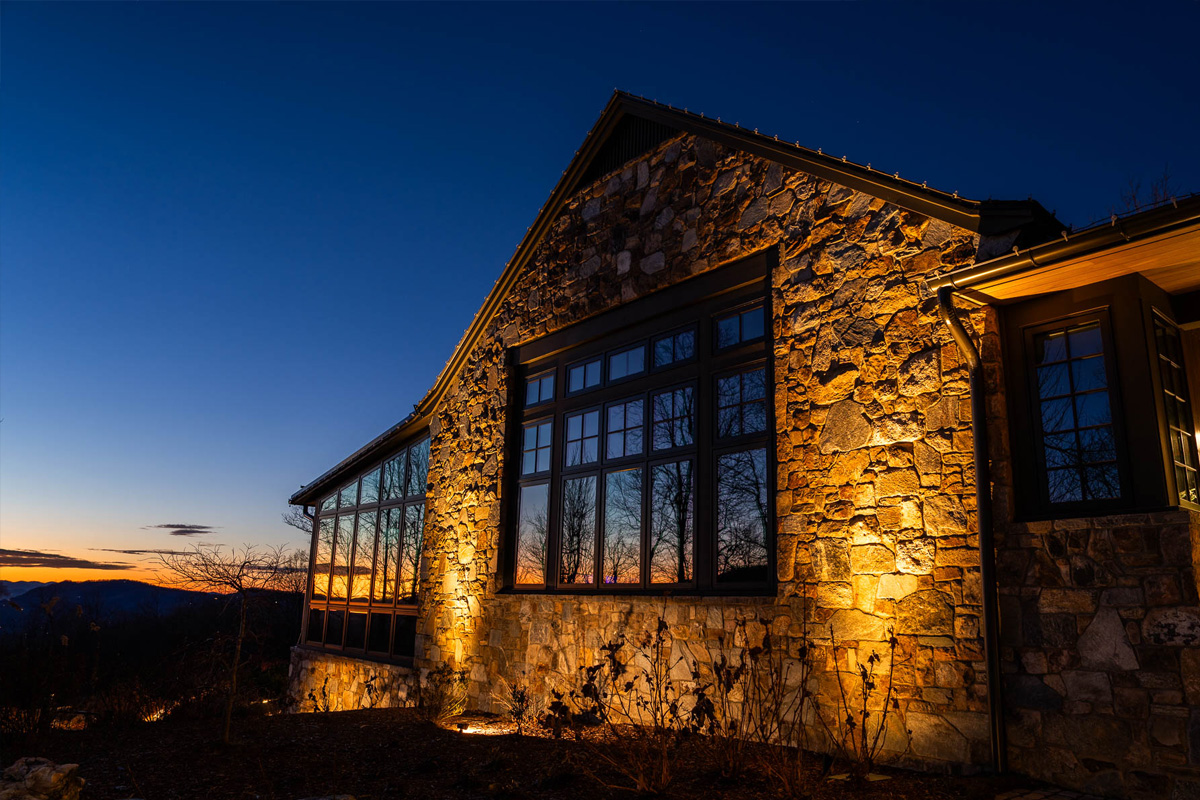
If your existing landscape lighting is looking tired, our article on upgrading existing landscape lighting covers what can be improved. You can also see our landscape lighting and patio lighting pages.
What should I look for in a holiday lighting company’s takedown policy?
- Is takedown included or billed as a separate visit?
- Is there a defined window so you know when the lights will be off your house?
- Are lights cleaned and stored, or just dropped in boxes on your porch?
- Are runs labeled for where they go on your home, so next year’s install matches this year’s?
- Who owns the lights, and what happens to them if you change companies?
- Does the crew wait for safe conditions, or rush takedown on icy days to stay on schedule?
- Is the crew insured for winter roof work? Ours is.
Frequently asked questions
When will my Christmas lights come down?
Between January 1 and February 15. We schedule by neighborhood and send you your date range ahead of time.
Do I need to be home for takedown?
No. Just make sure we have any gate or door codes and that reactive pets are secured.
Where are my lights stored?
We store them for you between seasons, cleaned and labeled for their location on your home, ready for next year’s install.
Can I keep my lights up longer?
Takedown happens within our January 1 to February 15 window. If you want light on the roofline year round, permanent lighting is the better fit.
What if something was damaged during the season?
Issues caused by our installation are covered in your install and takedown fee. Damage from weather, animals or other contractors is repaired at our standard hourly service rate.
Can I change my design for next year?
Yes. Upgrades or changes can be discussed between February and September and added to your final invoice.
Book a holiday lighting service that handles the whole season
See everything included on our holiday lighting page. Every new client starts with a paid design consultation, $135, which includes our time together and your design proposal (or a few options to compare), and the fee goes toward your materials if you move forward.
Call (828) 280-4787 or use the Get A Quote button to request your quote.