Porch, Pergola and Deck Lighting in Asheville
If you spend time there, we can light it: covered porches, pergolas, decks, pool areas, garden paths, outdoor dining areas and fire pit spaces. Most patio and outdoor living lighting projects are done in a single day, and we attach to your existing structures wherever we can.
Outdoor living in the mountains runs from spring evenings to crisp fall nights. A porch or deck that goes dark at sunset is a space you only use half the time. Here is how we light the spaces you actually use, what to think about on a mountain property, and how to plan now so your lights are ready when the evenings warm up.
Which outdoor spaces can be lit?
Patios, covered porches, pergolas, decks, pool areas, garden paths, outdoor dining areas and fire pit spaces. If you spend time there, we can light it. A few common examples on Asheville area homes:
- The covered porch where you drink coffee in the morning and want something softer than a single porch fixture at night.
- The back deck with the long view, often a story or more above the yard on a sloped lot.
- The pergola over an outdoor dining table, where string lights turn dinner into an evening.
- The fire pit area down a few steps from the house, which needs light to get to and from safely.
- The garden path that connects them all.
What kind of lighting works best?
It depends on the mood you want and how you use the space. We install three kinds, often together:
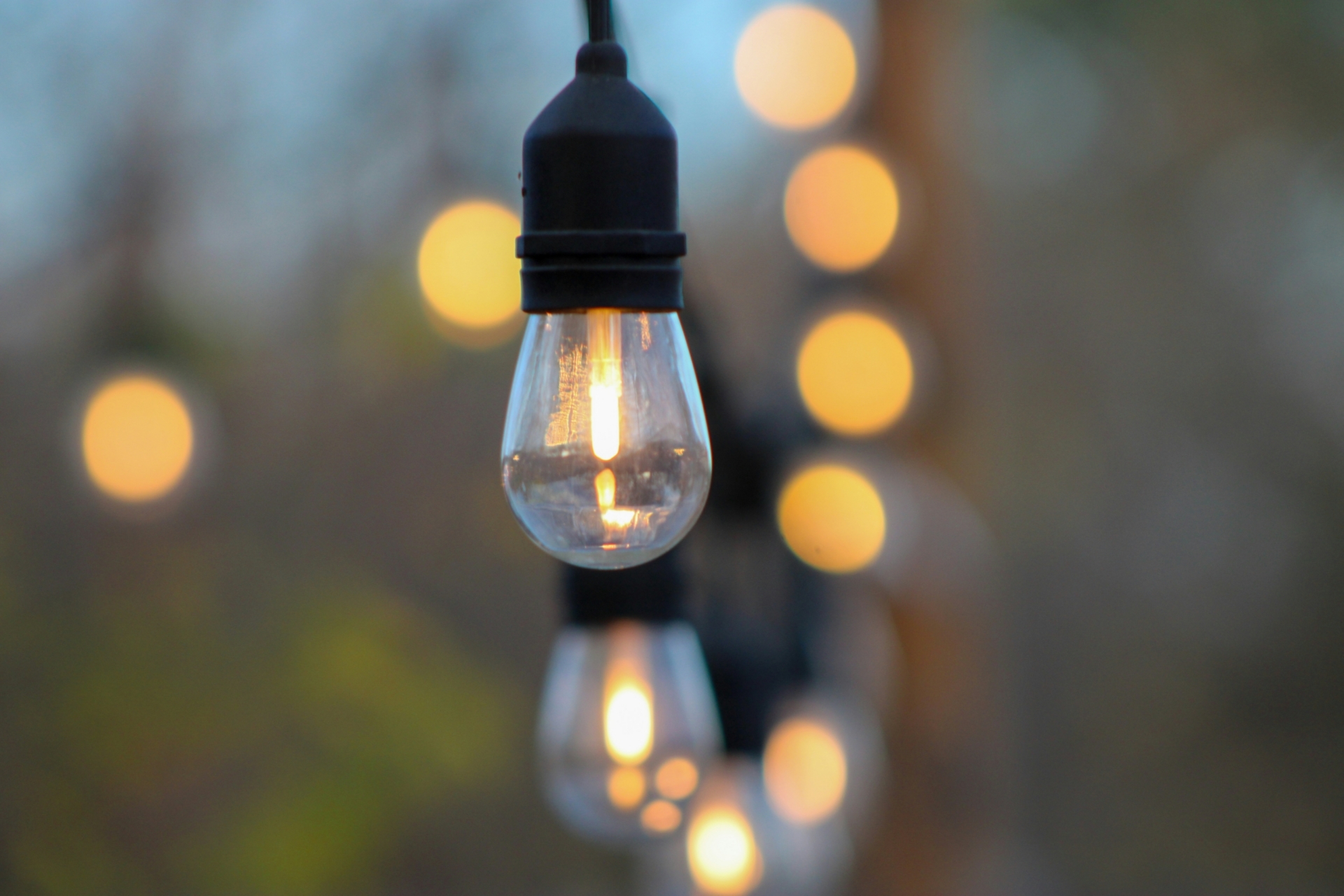
- Bistro string lights for a warm, festive feel over patios and backyards.
- Low-voltage LED fixtures for steps, paths and edges.
- OMNI programmable lighting for color changes at the press of a button.
Lighting can be dimmable and zone-controlled, from a quiet dinner to a full gathering, with smart-control options from your phone.
How do the options compare?
- For atmosphere: timeless warm white bistro lights are hard to beat over a dining area, pergola or patio. They create the warmer, more festive feel most people picture when they think of an outdoor evening.
- For safety and edges: low-voltage LED fixtures light the steps, paths and deck edges you need to see, without turning the whole space bright.
- For flexibility: dimming and zone control let one setup work for a quiet night for two and a full backyard gathering.
Most spaces end up with a combination. String lights overhead set the mood, and low fixtures handle the places where people walk. We talk through fixture styles, light temperature and which areas matter most to you, and recommend what fits your space best.
How do you light each kind of space?
Every space is designed individually, but here is how we usually think about the most common ones.
Covered porches
A covered porch already has a roof and posts, which makes it one of the easiest spaces to light well. The goal is usually softer, warmer light than a single overhead fixture gives you, so the porch feels like a room in the evening. Dimming matters here, because the same porch is used for a quiet evening and for greeting guests.
Pergolas
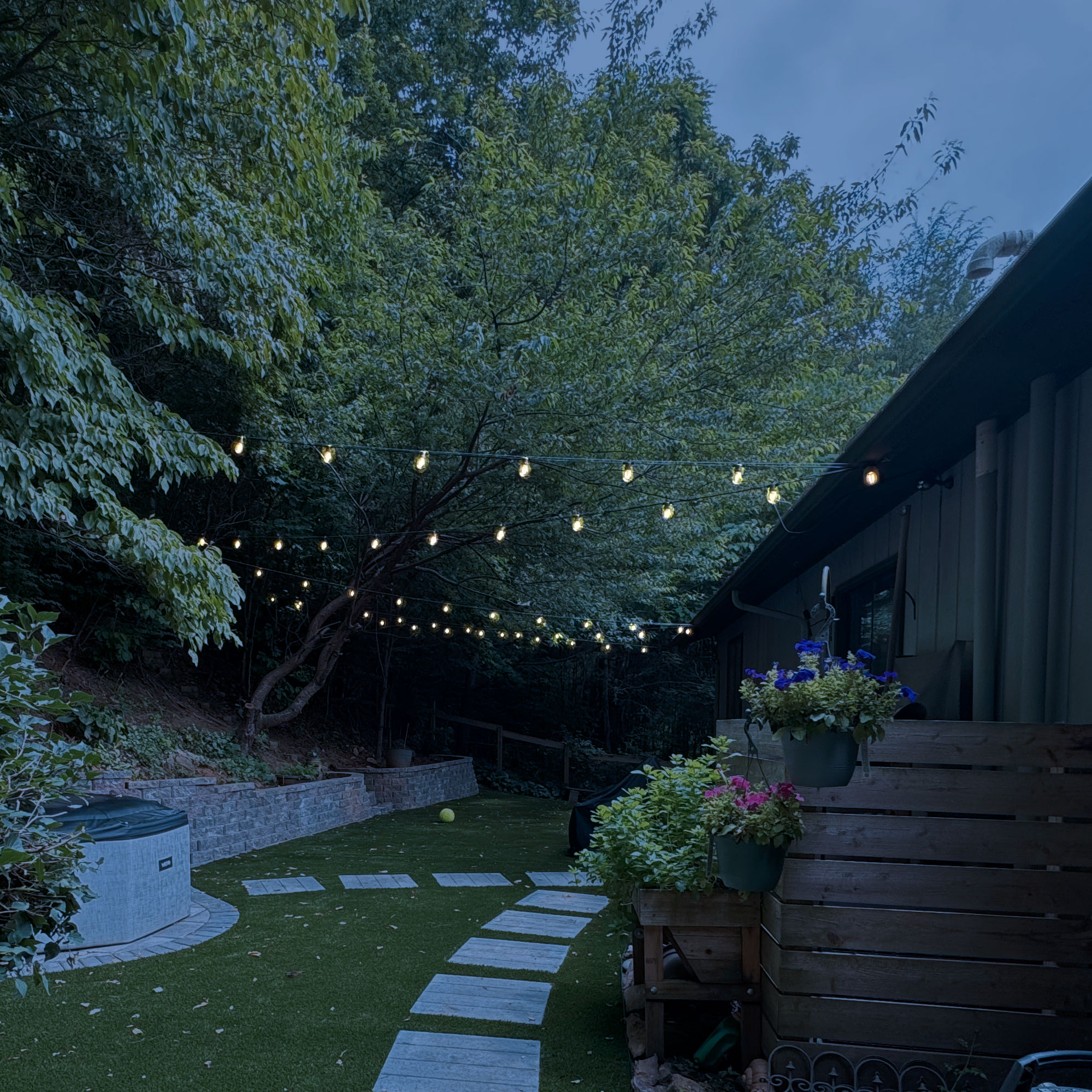
Pergola beams are a natural frame for bistro string lights. Lights can run across the beams or in a pattern overhead, giving a dining table or seating area that warm, festive feel. Because the structure is already there, a pergola often needs no extra posts at all.
Decks
Decks need two kinds of light: something to set the mood, and something to make the stairs and edges easy to see. On an elevated mountain deck, low-voltage LED fixtures on the steps and edges are often as important as the lights overhead.
Fire pits, pools and dining areas
These spaces are often a short walk from the house, sometimes down a few steps. Lighting the path to them is part of lighting them. Zone control lets you light the fire pit area for an evening outside without lighting the whole yard.
Garden paths
Paths tie everything together. Low fixtures along the edges keep the walk safe and keep the light low, so the path does not compete with the spaces it connects.
Can you attach lights to my pergola, porch or fence?
Yes, that is usually our first approach. We work with existing structures wherever possible and set posts when a project calls for it. We use marine grade stainless steel hardware wherever possible, because outdoor hardware in our climate has to hold up.
Here is how we think about attachment, step by step:
- Start with what is there. Pergola beams, porch posts, deck railings, fences and the house itself are all candidates.
- Check that it will hold. Overhead string lights need solid anchor points, especially in a space that catches wind.
- Add posts only where needed. If there is nothing to attach to on one side of a patio, we set posts so the lights hang where they should.
- Use hardware made for the weather. Marine grade stainless steel wherever possible, with turnbuckles that can be tightened over time.
What is different about outdoor living spaces in the mountains?
- Elevated decks. On sloped lots, the deck is often well above the ground below. Light on the stairs and edges matters as much as the light overhead.
- Steps between levels. Many Asheville yards are terraced, with a patio, a path and a fire pit on different levels. Low fixtures on the steps make the whole yard usable after dark.
- Wind and weather. Ridgeline and open-slope homes see more wind, and every outdoor space here sees rain, humidity and winter cold. That is why hardware and fixtures need to be built for it.
- The view. Many decks are built for a mountain view. Good lighting keeps the space comfortable without washing out the view beyond it.
How long does installation take?
Most patio lighting projects are completed in a single day. Larger or more complex spaces may take two. Our team arrives with everything needed: fixtures, wiring and mounting hardware. We leave your space clean and your lights on.
Do I need to be home?
Not typically. Unless there is unusual access or an unusual electrical situation, we can install with no one on site. If there is something unusual about your property, we talk it through during the consultation.
What happens after the lights are up?
Very little, which is the point. The fixtures we use are long-lasting and weatherproof. Once a year we recommend a maintenance visit to clean bulbs, check attachments and tighten turnbuckles, so string lights stay taut and fixtures stay bright. In the mountains, where wind, rain and winter cold all take a turn, that yearly check keeps an outdoor space looking the way it did on install day. And if something is not working the way it should between visits, you can always call us.
When is a good time to plan porch and deck lighting?
Now is a good time to start thinking about it. Spring installs are being booked now, and planning over the winter means your lights can be up and working by the first warm evenings. It also gives you time to think about how you actually use your outdoor spaces before the season starts.
A few questions to think through before we meet:
- Which spaces do you use most in the evening, and which would you use more if they were lit?
- Do you mostly host small dinners, large gatherings or both?
- Where do people walk after dark, and where have you nearly missed a step?
- Do you want to control the lights from your phone, or is a simple switch enough?
What happens at the design consultation?
One conversation is usually all it takes to get a clear plan. Here is what the visit covers:
- We visit your space. We see the porch, deck, pergola or patio in person, along with the structures we might attach to.
- We walk through your goals. How you use the space, who you host and which evenings matter most to you.
- We talk through the details. Fixture styles, light temperature, dimming and smart-control options, and which areas matter most: covered porch, garden path, poolside or dining area.
- You get your design proposal. A plan for your space, or a few options to compare, so you can choose the look that fits.
Many homeowners also use the visit to ask about the rest of the property, such as lighting the paths, trees and stone around the deck, so the outdoor living space and the yard work together after dark.
What should I ask a lighting company about outdoor living lighting?
- Will you use my existing structures? Attaching to what is there is usually the cleanest approach.
- What hardware do you use? Ask whether it is made to hold up outdoors in our climate.
- Can the lights be dimmed or zoned? One setting rarely fits every evening.
- What maintenance is needed? Ask what a yearly visit includes.
- Are you insured? Never let an uninsured company or person do this kind of work on your property.
Frequently asked questions
Do I need to be home?
Not typically. Unless there is unusual access or an unusual electrical situation, we can install with no one on site.
What maintenance do the lights need?
Very little. The fixtures are long-lasting and weatherproof. We recommend a yearly visit to clean bulbs, check attachments and tighten turnbuckles, and you can always call us if something is not working the way it should.
Can the lights be dimmed or controlled from my phone?
Yes. We offer smart-control and dimmer options, and we discuss what makes sense for your setup during the consultation.
Do you also light the yard around the deck?
Yes. Paths, trees and stone around your outdoor living space can be part of the plan. See our landscape lighting page and landscape lighting for mountain homes.
Which towns do you serve?
Asheville, Weaverville, Black Mountain, Hendersonville, Waynesville, Brevard, Arden, Fletcher, Woodfin and more. Not sure if we come to you? Just ask.
See more on our patio and outdoor living lighting page, or read how professional patio string lights are installed. Every project starts with a paid design consultation, $135, which includes our time together and your design proposal (or a few options to compare), and the fee goes toward your materials if you move forward. Call (828) 280-4787.