Upgrading an Existing Landscape Lighting System in Asheville
Sometimes an existing landscape lighting system can be extended or improved, and sometimes it is better to start fresh. If the system was installed with quality fixtures and clean wiring, we can often build on it. Either way, we assess everything honestly and tell you exactly what we find before recommending a path forward.
Plenty of Asheville homes came with landscape lighting that looked fine on day one and tired a few years later. Maybe half the fixtures are dark, the light lands on the lawn instead of the trees, or there are wires showing in the mulch. Here is how we look at an existing system, what we check, and how we decide what it needs.
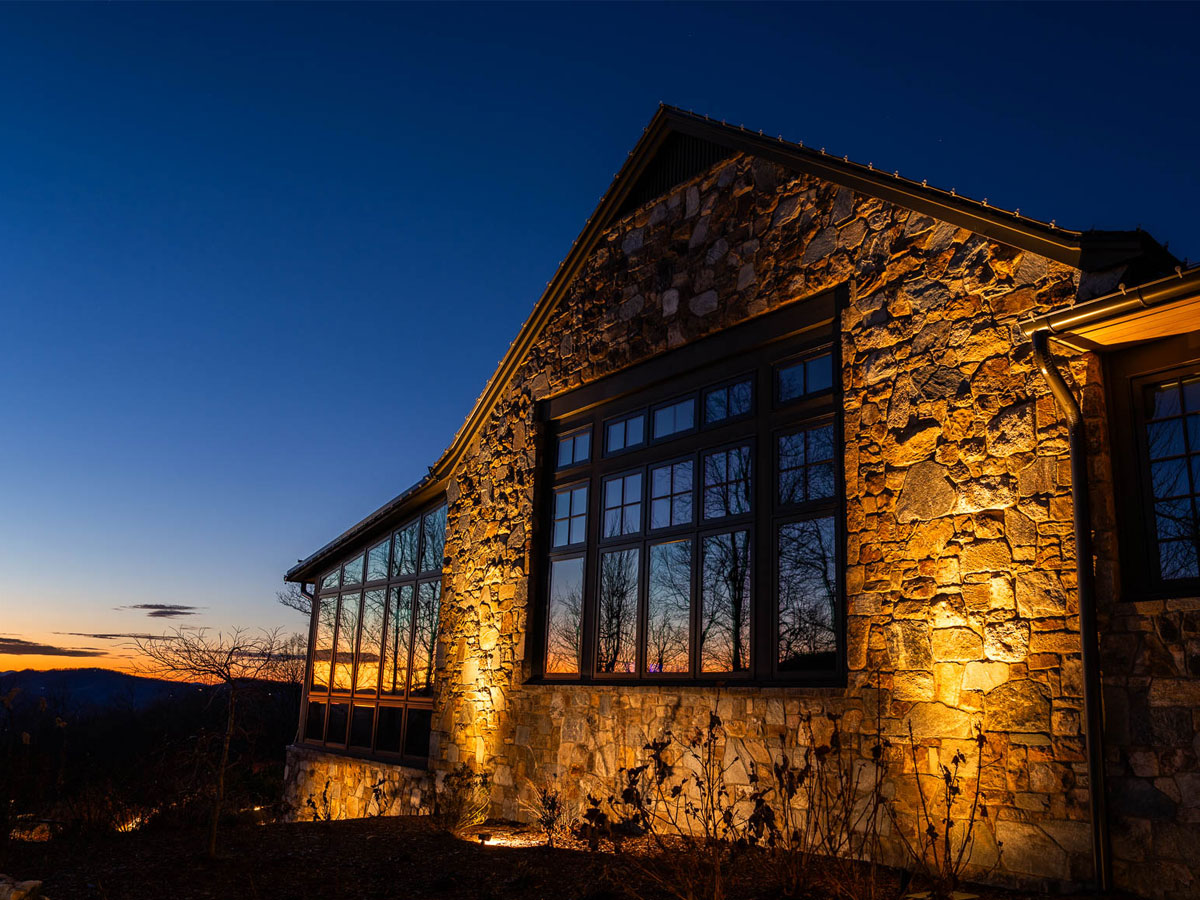
What are the signs a system needs attention?
You do not need to be a lighting designer to know something is off. These are the things homeowners usually notice first:
- Dark fixtures. A few lights stopped working and never came back.
- Faded or cracked housings. Fixtures that looked sharp when new now look chalky, corroded or broken.
- Light in the wrong places. The beam hits the side of a shrub, the lawn or a neighbor’s window instead of the tree, wall or path it was meant for.
- Visible wiring. Wire creeping up through the mulch, across a bed or along the surface of the lawn.
- A flat look. The yard is lit, but nothing stands out. Everything is the same brightness and the house still disappears at dusk.
- New features with no light. A patio, wall or path was added after the original system and was never included.
What do we look at first?
- The fixtures. Are they commercial-grade and built for permanent outdoor use, or hardware store lights that have faded, corroded or cracked?
- The wiring. Clean, buried wire runs, or loose wire and visible conduit across beds and lawns?
- The design. Does the light land on what is worth seeing, your trees, stone, paths and architecture, or does it just flood the yard?
- The property. Grade changes, how the driveway meets the entrance, and the trees and stone that should shape the system.
Good landscape lighting starts with understanding what elements already exist. That applies to the lighting itself as much as to the property.
How does the assessment work, step by step?
- We walk the property with you. You tell us what you like, what bothers you and how you use the space in the evening. Where do you arrive? Where do you sit? What do you look at from inside?
- We look at the existing fixtures. Material, condition and whether they were built for permanent outdoor installation in Western North Carolina’s climate.
- We trace the wiring where we can. Is it buried cleanly, or exposed and loose? Clean wiring is one of the main things that makes a system worth building on.
- We look at the design. Fixture selection, placement and beam angle should all be deliberate choices. We check whether the current lights are doing that work or just sitting in the ground.
- We read the property. The architecture, the trees, the grade changes and the way the driveway meets the entrance all inform what the system should become.
- We tell you exactly what we find. Then we recommend a path: extend and improve, or start fresh.
What do mountain properties add to the picture?
An existing system in Asheville has usually been through more than one in a flatter, milder place. These are the issues we see most:
- Grade changes. Sloped yards, terraced beds and stone steps are everywhere here. Fixtures set on a slope can lean or shift over time, and a beam that was aimed well on day one can end up pointed at the ground.
- Long driveways. Many homes sit well back from the road, and the drive is the first thing guests see after dark. If the original system skipped it, that is often the biggest gap.
- Mature trees that kept growing. A small tree that was uplit years ago may now be a large one with a canopy the old fixture cannot reach. Other trees may now be in the way of a light that used to work.
- Stone and retaining walls. Stone is one of the best things to light on a mountain property. Older systems often treat it as a background instead of a feature.
- Climate. Freeze, thaw, rain and humidity are hard on fixtures that were not made for permanent outdoor installation here.
When can an existing system be extended?
When the fixtures are quality and the wiring is clean, adding fixtures, adjusting placement and fine-tuning beam angles can make a big difference without starting over. Fixture selection, placement and beam angle are deliberate choices, not just lights stuck in the ground.
Common improvements when a system is worth keeping include:
- Re-aiming fixtures so the light lands on trees, stone and architecture again.
- Adjusting stake placement on fixtures that have shifted with the slope or the soil.
- Adding fixtures to cover features the original system missed, such as a path, a wall or a newer patio.
- Cleaning fixtures so the light output is what it should be.
When is it better to start fresh?
If the fixtures were not built for permanent outdoor installation in Western North Carolina’s climate, or the wiring is messy and exposed, extending the system usually means extending the problems. In that case we design a new system around what your property already does well.
A simple way to think about it: you would not build an addition on a cracked foundation. If the base of the system is weak, more fixtures on top of it will not fix the base.
Extend or replace: how do they compare?
- What it builds on. Extending keeps quality fixtures and clean wiring and improves the design around them. Starting fresh replaces fixtures and wiring that are not worth keeping.
- What it solves. Extending fixes aim, coverage and gaps. Starting fresh also fixes the underlying problems: fixtures that will not last and wiring that will keep showing.
- How it is priced. Either way, pricing reflects the scope of your property. Fixture count, wire runs, transformer capacity and the complexity of the landscape all factor in, and we provide a detailed quote before any work begins.
What does a new system look like?
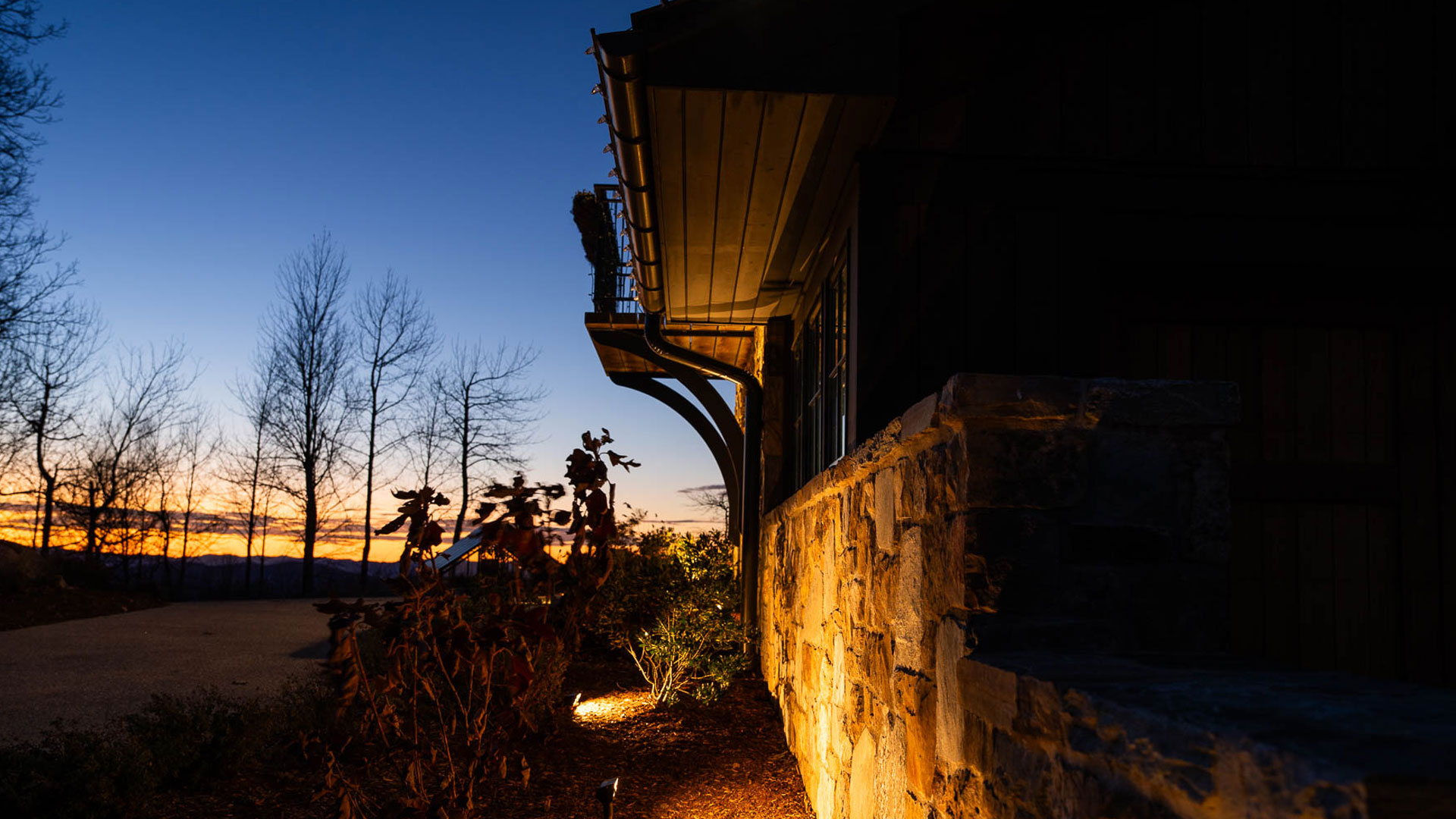
- Commercial-grade, low voltage LED integrated and modular fixtures, built for permanent outdoor installation in Western North Carolina’s climate.
- Brass as our preferred material, because it holds its finish, ages beautifully and directs light exactly where it belongs.
- Clean wire runs and zero visible conduit.
- A design built around your architecture, your trees and your pathways, because no two properties light the same way.
These are not fixtures you will find at a hardware store. We have spent years researching the best available products, and we stand behind manufacturers that hold our same values of quality and integrity.
As our founder Jessica Averette puts it, “Strategically placed lighting beautifies your home’s architectural aspects, adds depth, and extends your space beyond its walls.” Light reveals. Darkness defines. A good upgrade uses both.
What does a good design light first?
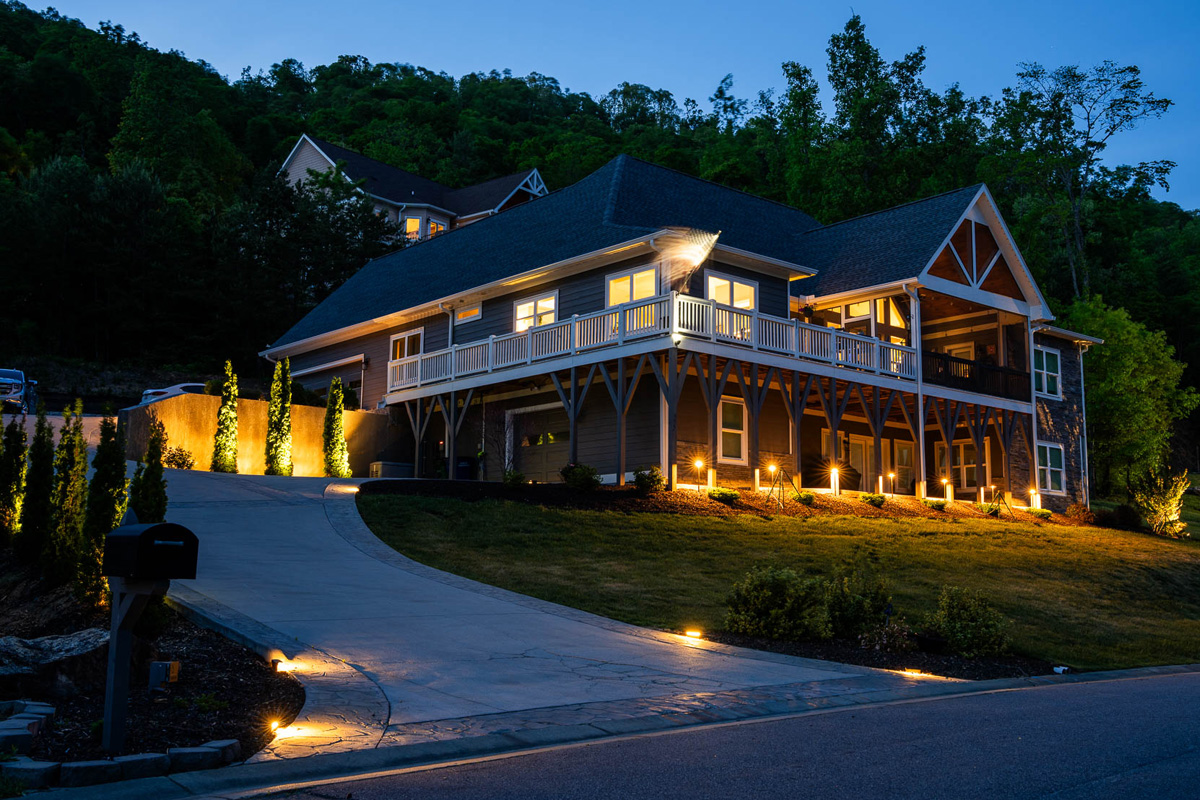
Whether we extend a system or start fresh, the design follows what your property already does well. The trees, the stone and the lines of your architecture are already telling a story, and the job is to make sure none of it disappears at dusk. On Asheville area properties, that usually means looking at:
- The arrival. How the driveway meets the entrance, so the first thing you see coming home is clear and welcoming.
- Stone. Facades, walls and steps take light beautifully and add texture after dark.
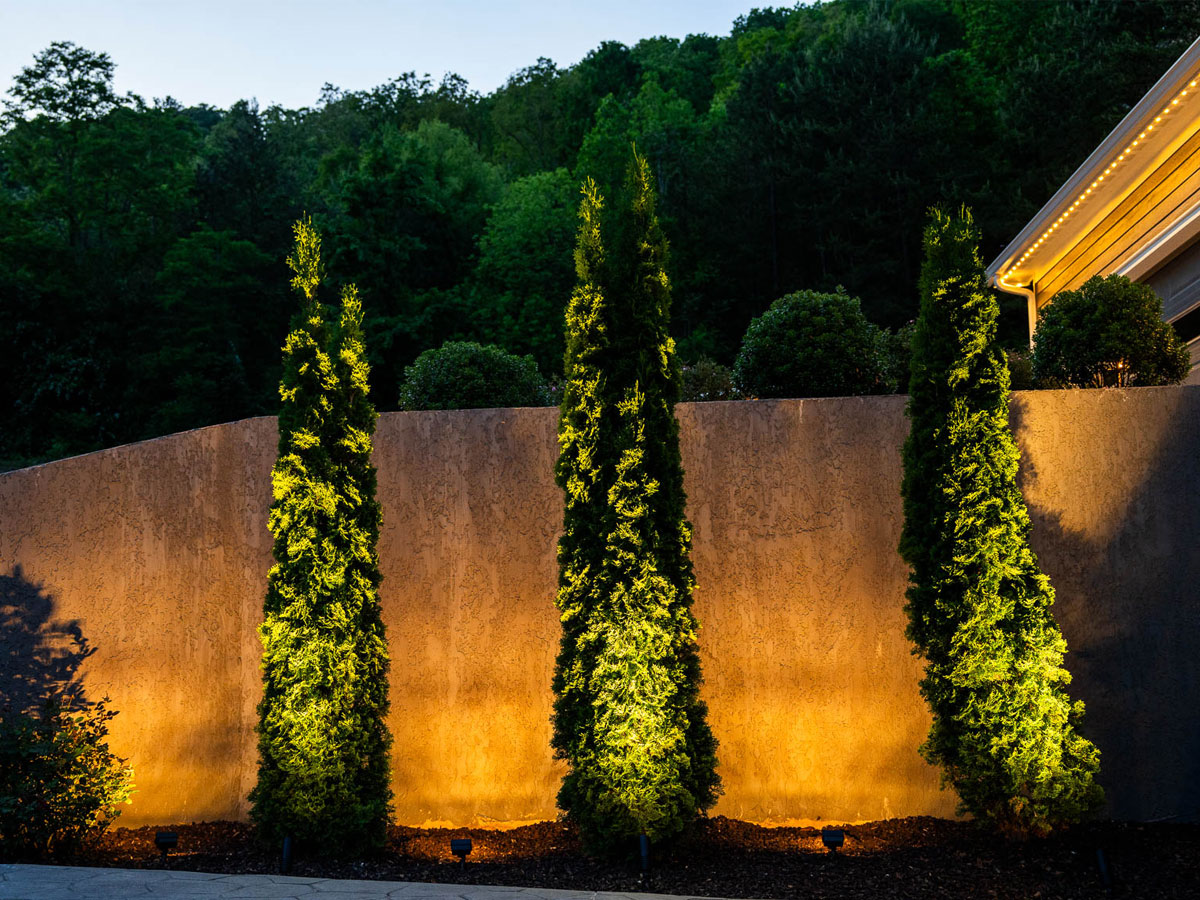
- Trees. Mature trees uplit from below give a property depth and scale at night.
- Paths and steps. On sloped lots, lighting where people walk is about safety as much as looks.
- Architecture. The lines of the house itself, so it reads as a whole instead of a few bright spots.
Our work includes wall and tree detail, stone facade detail and whole-home facade lighting, all built on that same approach.
What happens after the upgrade?
Low voltage LED systems are designed to run reliably with minimal upkeep. Over a season, though, mountain properties keep moving: soil settles, slopes shift stakes and trees grow. That is why we recommend an annual maintenance visit:
- Clean the fixtures so the light output stays where it should be.
- Adjust stake placement on fixtures that have shifted.
- Fine-tune beam angles that moved over the season, so light keeps landing on the right trees, stone and paths.
It keeps the system looking and performing its best year after year, and it is the habit that keeps an upgraded system from becoming the tired one you started with.
What should I ask before anyone touches my existing system?
- Will you tell me honestly whether it is worth keeping? You want an assessment, not an automatic sales pitch for a new system.
- What fixtures do you install, and what are they made of? Ask whether they are commercial grade and built for permanent outdoor use here.
- Where will the wire go? The answer should be clean runs and no visible conduit.
- How do you choose placement and beam angle? They should be deliberate design choices for your property.
- What does maintenance look like? Ask what an annual visit includes.
- Are you insured? Never let an uninsured company or person do this kind of work on your property.
Frequently asked questions
Does landscape lighting need maintenance?
Low voltage LED systems run reliably with minimal upkeep. We recommend an annual visit to clean fixtures, adjust stake placement and fine-tune any beam angles that shifted over the season.
Can you add lighting to just one area, like a driveway or a wall?
If the existing system has quality fixtures and clean wiring, adding fixtures to cover a missed area is one of the common ways we extend it. We assess the system first and tell you what we find.
Are you insured?
Yes, Winter Star Lights is fully insured.
When can we start?
We schedule landscape lighting consultations year round. Lead times shift during our busy seasons, so the sooner we connect, the better. Spring installs are being booked now, and like planting a tree, the best time to start is right now.
See our full process on the landscape lighting page, or read landscape lighting for mountain homes. The design consultation is a paid visit, $135, and includes our time together and your design proposal (or a few options to compare), and the fee goes toward your materials if you move forward. Call (828) 280-4787.