How Far Apart Should Path Lights Be?
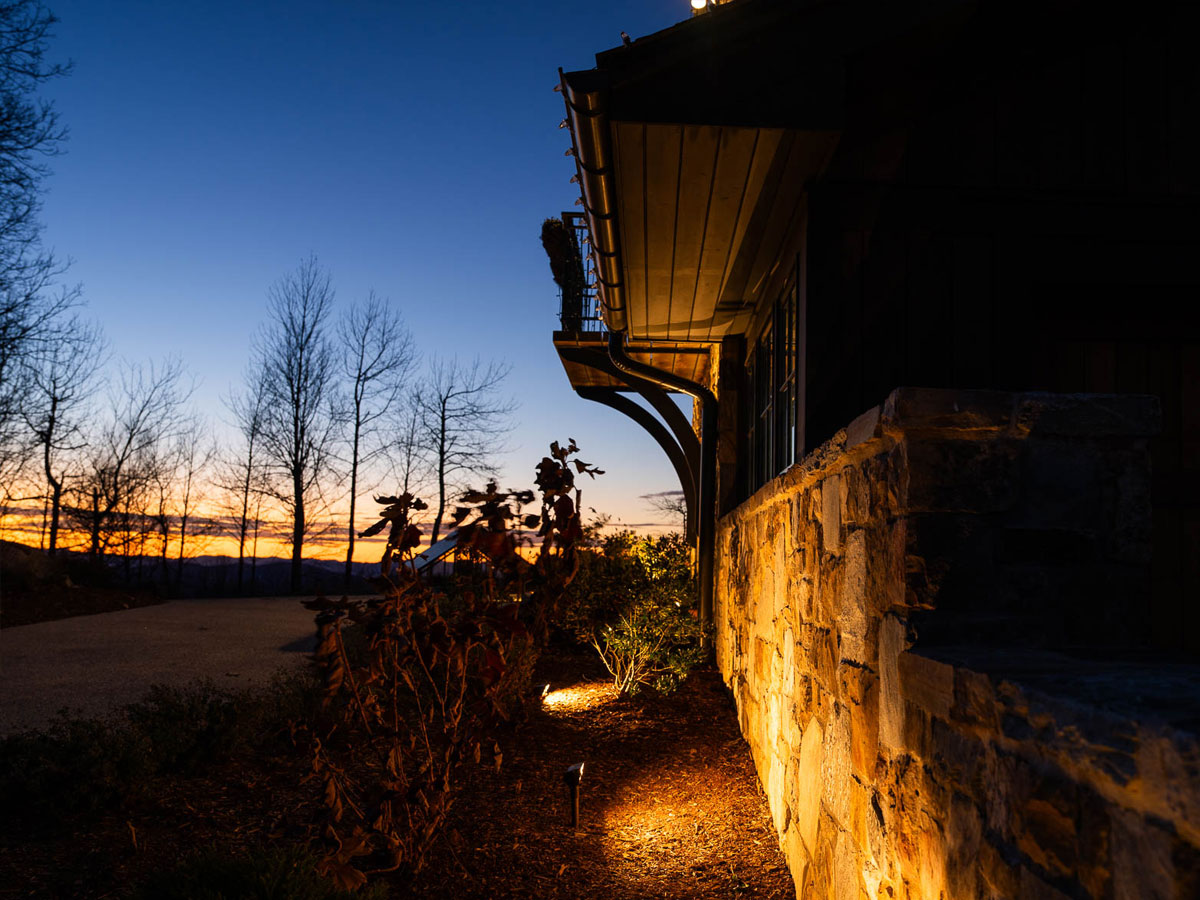
Path lights are usually spaced so their pools of light just meet or slightly overlap on the walking surface, which on many residential paths works out to somewhere around six to ten feet apart. The right spacing depends on the fixture’s output and height, the width of the path and the grade. On sloped Asheville properties, steps, turns and level changes matter more than a fixed distance.
Light the ground, not the fixture
The goal of path lighting is to show where to step. A good path light throws a soft pool of light down onto the walkway and the plantings beside it, while the fixture itself stays low glare and easy to overlook. When fixtures are too bright or too close, the path looks like a runway and your eye goes to the lights instead of the ground.
So spacing starts with the fixture. A taller fixture with a wider spread covers more ground and can be placed farther apart. A short, tightly focused fixture needs to be closer. That is why two paths with different fixtures can both look right at different spacing.
Why a straight line of lights often looks wrong
Placing fixtures in two straight rows on both sides of a path, evenly spaced, is the most common mistake. It looks mechanical in daylight and creates a striped pattern at night. Staggering fixtures from one side of the path to the other, and tucking them into plantings rather than in open lawn, gives a more natural look with fewer fixtures.
Gaps are fine too. A short stretch of darker path between two pools of light still feels safe, as long as there are no dark spots at the places where people actually trip.
Wider paths and driveways change the approach too. A wide walkway may need fixtures on both sides in a loose stagger, while a narrow garden path through a bed can often be lit from one side alone.
Mountain paths: steps, turns and slopes come first
In Western NC, very few paths are flat and straight. Stone steps, switchbacks, roots and changes in grade are where lighting does the most good. Place light at the top and bottom of every set of steps, at turns, at junctions where paths meet the driveway or patio, and anywhere the surface changes from stone to gravel or mulch. Then fill in between as needed.
On stone stairs, low step lights or fixtures that wash light across the treads often work better than tall path lights. Our post on landscape lighting for steep driveways, stone stairs and paths covers those situations in more detail.
Why placement is tested at night
Distances on a plan rarely match how light looks on the ground. Plantings, slope and the color of the stone all change how far light travels. That is why our landscape lighting process includes a nighttime placement visit, where fixtures are set out after dark and flagged exactly where they belong before installation begins.
After installation, a final walkthrough at night is used to fine tune beam angles and stake positions. It is the only reliable way to make sure the pools of light connect the way they should.
Keeping path lights looking right over time
Plants grow, mulch builds up and stakes get bumped by mowers and foot traffic. A light that was perfect at installation can end up buried in a shrub or tilted toward the house. An annual maintenance visit to clean fixtures, adjust stakes and fine tune beam angles keeps the path lit the way it was designed.
If you have an older system with uneven spacing or dead fixtures, it can sometimes be improved rather than replaced. Our post on upgrading an existing landscape lighting system explains how that is assessed.
Frequently asked questions
How many path lights do I need?
It depends on fixture output, path length and grade. Light the steps, turns and junctions first, then fill in so pools of light meet.
Should path lights go on both sides of a walkway?
Not usually in matching rows. Staggering fixtures from side to side looks more natural and often needs fewer lights.
How bright should path lights be?
Bright enough to see the walking surface clearly, but soft enough that the fixture itself does not glare. Low, even light reads better at night.
Do path lights work on steep slopes?
Yes, but placement matters more than spacing. Light the top and bottom of steps and any change in grade.
Who designs path lighting in Asheville, NC?
Winter Star Lights designs and installs path and landscape lighting in Asheville and Western NC. Call (828) 280-4787 to request a consultation.
Get a free estimate in Asheville, NC
Call (828) 280-4787, see the service, or request a free estimate.
Leave a Reply
Want to join the discussion?Feel free to contribute!